Why brake wear matters
Brakes are the single most important safety system on your vehicle. Stop-and-go traffic on I-45, I-35, and I-635 wears pads faster than highway driving, so Texas commuters often need brakes sooner than the owner's manual suggests.
Catching wear early usually means you only replace pads. Waiting too long can damage rotors and calipers, doubling or tripling the cost.
1. High-pitched squealing
Most pads include a small metal wear indicator that squeals when the pad gets thin. If you hear it consistently when braking, schedule service soon.
2. Grinding or growling
Grinding means metal-on-metal contact. The pad material is gone and the backing plate is cutting into the rotor. Stop driving if possible and call a mechanic.
3. Vibration or pulsing pedal
A pulsing pedal usually means warped or unevenly worn rotors. It's common after repeated hard stops or on vehicles that tow.
4. Soft or spongy pedal
A pedal that sinks toward the floor can point to air in the lines, a fluid leak, or a failing master cylinder. This is a safety issue — don't ignore it.
5–7. Pulling, warning light, and long stopping distance
If the car pulls to one side, the brake warning light comes on, or you need more distance to stop, have the system inspected right away.
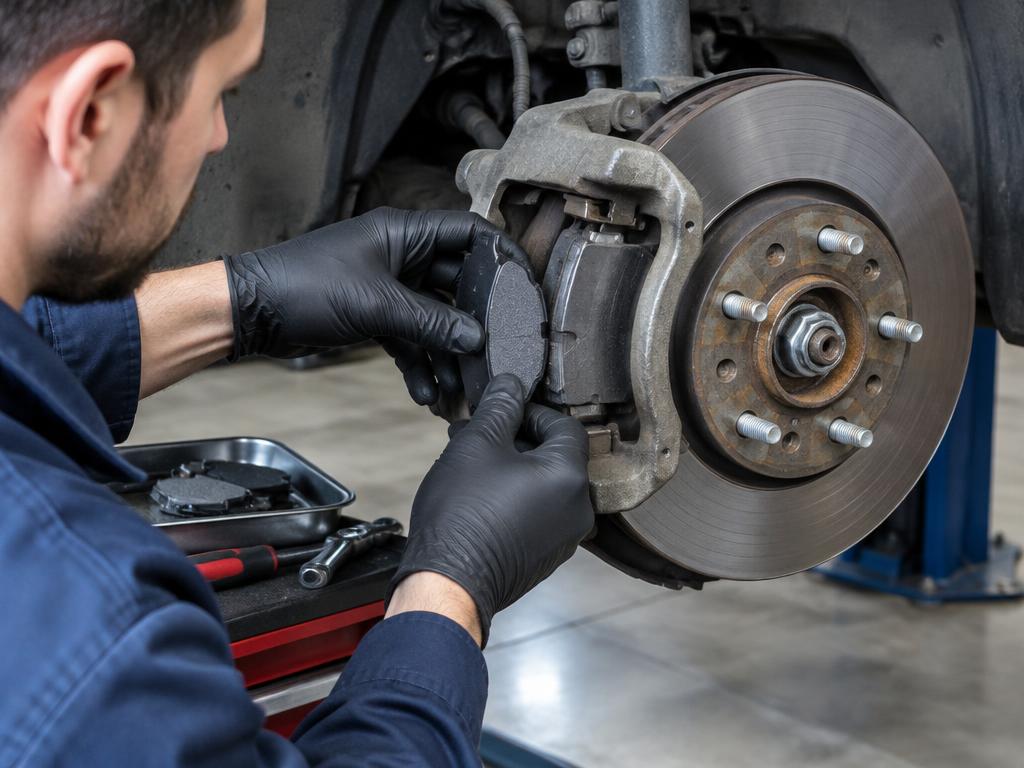
A mobile mechanic can inspect and replace brakes in your driveway, usually in one to two hours.
Related services
- Mobile brake repair — Pads, rotors, calipers, and brake fluid service on-site.
Need a mobile mechanic near you?
Our mobile mechanics can come to you today. Call 469-813-8778.